






Why You're Afraid to Become Someone New
Changing who you are changes the life you get, so why is it so hard to do? Two fears keep us in a shell we've outgrown. Here is what a dozen writers say about each of them, why other people take so long to notice, and small ways to try on a new you.
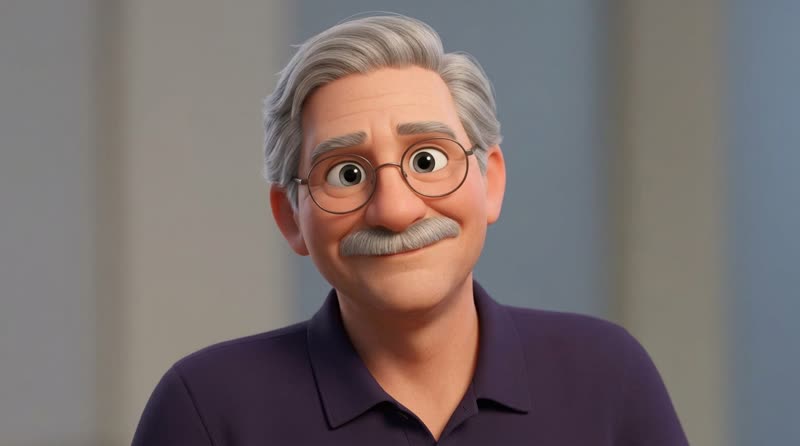
Griff makes furniture for a living. For years, whenever someone pointed out a mistake, he folded his arms and explained why it wasn't really his fault.
Then one day he tried something different. He listened, and he asked what they would do.
It sounds like a small thing. But he started learning faster, so his work got better. Better work meant calmer evenings, and calmer evenings meant kinder conversations at home. One change in who he was, and it showed up everywhere.
Most of us already sense this. If you became a slightly different person, your life would follow. So why don't we just do it?
Because changing who you are means leaving someone behind: the person who has your friends, your habits and your whole familiar life. A hermit crab knows this problem well. It lives in a borrowed shell, and as it grows, the shell gets tight. To move into a bigger one it has to step out first, and for a moment it has no shell at all.
The rest of this essay stays with that moment: the two fears that keep us in a shell we've outgrown, what to do when people still expect the old you, and how to try on a new shell a little at a time.
Who you are becomes your life
Joe Dispenza puts the whole idea in one line: "your personality creates your personal reality." By personality he means how you think, how you act and how you feel. So the person you are today built the life you have today, and a new life, he says, can't be built by the old personality. "You have to become someone else."
The plastic surgeon Maxwell Maltz came at the same idea from a stranger angle. Some of his patients got a new face and their whole personality opened up. Others got the same kind of new face and felt exactly as before. What made the difference was the picture they held of themselves. He called it the self-image, and in Psycho-Cybernetics he wrote that it sets the boundaries of what you can do: "Expand the self-image and you expand the 'area of the possible.'"
Half a century before Maltz, James Allen had put it in a sentence: "Men do not attract that which they want, but that which they are." Neville Goddard wrote that "there is nothing to change but our concept of self," and that once the self changes, the world reshapes itself to match.
A neuroscience writer, a surgeon, an essayist and a mystic, and they all land in the same place. Your life follows who you're being more than what you're wishing for.
Griff's workshop shows how this works without anyone noticing. When he was the defensive one, nobody mentioned the sticking drawer, so he never fixed it. Being defensive had built him a whole little world.
So if who you are shapes all of this, changing should be the easy part. It isn't, and there are two reasons.
Fear one: losing what you have
The first fear is about everything you already have. Your life is built around the person you are now. Your friends know that person, and even your bad habits have a place in the day.
The psychologist Gay Hendricks, in The Big Leap, says each of us carries "an inner thermostat setting that determines how much love, success, and creativity we allow ourselves to enjoy." When life goes past that setting, we find a way to sabotage it and "drop back into the old, familiar zone where we feel secure." He calls it the Upper Limit Problem.
He also names the hidden beliefs that hold the thermostat down. One of them is about loyalty: growing, he says, can feel like it would leave you "all alone, be disloyal to my roots, and leave behind people from my past."
Griff feels this one on Friday nights. For years, Friday has been complaining night with his old crew: bad bosses, bad luck, the usual. Lately, though, Griff has been enjoying his work, and saying so out loud feels like switching sides. So he complains a bit harder than he means to, just to fit in. He's staying loyal to an older version of himself.
Eckhart Tolle goes further. In his words, we "would rather be in pain" than "take a leap into the unknown and risk losing the familiar unhappy self." The ego, he says, doesn't much mind that an identity is an unhappy one, as long as it has one.
The novelist Paulo Coelho gives this fear a face in The Alchemist. A crystal merchant has dreamed all his life of one great journey and never taken it. When the boy who works for him suggests a way to grow the shop, he says no: "I don't want to change anything, because I don't know how to deal with change. I'm used to the way I am." And about the journey, he admits he would rather just dream about it.
In the end, what the first fear protects is the self your friends and habits belong to.
Fear two: the blank
The second fear is quieter. It's about not knowing who you'd be.
Dispenza says the hardest part of change is the first day you choose differently. Right away it feels unfamiliar. "It doesn't feel 'normal,'" he writes. "We don't feel like ourselves anymore," because we're not ourselves. He calls the stretch between the old self and the new one the river of change.
By his own reckoning, about ninety-five percent of who we are by the age of thirty-five runs on autopilot: memorized habits, reactions and feelings. That figure is his, not a measured one, but the point behind it is easy to recognise. The body gets used to familiar feelings, even painful ones. Step away from them and the pull back can feel like withdrawal.
Michael Singer describes the same pull as an edge. In The Untethered Soul he writes that we build a self-concept, move inside it like a house, and defend it. "When you approach the edges you feel insecurity, jealousy, fear, or self-consciousness. You pull back, and if you are like most people, you stop trying."
This is the hermit crab between shells. The old shell is tight, but it's known. Out in between, everything is soft and exposed.
Griff hits his edge at the Monday meeting. The old Griff would have argued. The new Griff isn't sure what he'd say. He has no script for this yet, and for a second it's easier to fold his arms again. That's the second fear: you haven't met the new you yet, so you can't know what they'd do.
When people still see the old you
If you do step out of the shell and start showing up as someone new, a strange problem is waiting. Everyone around you still remembers the old you.
The executive coach Marshall Goldsmith spent decades helping people change at work, and he found that changing the behaviour was the easier half. "I calculate that you have to get 100% better in order to get 10% credit for it from your coworkers." Other people's view of you, in his experience, can take a year or more to catch up.
Griff has been listening for weeks now. But when Olive, who works beside him in the workshop, brings him a note about a drawer, she still braces for the old Griff. She talks fast, softens everything and waits for the folded arms. It stings. The tempting move is to prove he's changed, or to be annoyed that she can't see it.
Her flinch is a habit, though, just like his old one was. She learned it from the old Griff, and she'll unlearn it from the new one.
Carl Jung called the face we show the world the persona, "that which in reality one is not, but which oneself as well as others think one is." Ralph Waldo Emerson noticed that other people only have our past acts to go on, and that we keep acting the same because we don't want to disappoint them. "Why drag about this corpse of your memory," he asked, "lest you contradict somewhat you have stated in this or that public place?"
Goddard's advice was not to argue with other people's picture of you at all. "Do not try to change people; they are only messengers telling you who you are. Revalue yourself and they will confirm the change."
So Griff keeps doing it. The next time Olive brings a note, he thanks her and asks a question. And the time after that. Around the fifth time, she stops bracing.
What falls away
Some things will fall away as you change. They aren't a price you pay for growing. They just don't fit who you are anymore. And some things stay, and you see them in a new light.
Griff still goes out on Fridays. One or two of the old crew drift off, and that's okay. Others start telling him about their own work, the parts they enjoy, and a new friend from the workshop starts joining them. The friends didn't vanish. The complaining did.
Biologists have watched hermit crabs do something stranger still. Sometimes an empty shell turns up that's too big for any crab nearby. So the crabs gather around it, line up by size and wait. When a big enough crab arrives and moves in, the next crab takes its old shell, and the next takes that one, all the way down the line. Researchers call it a vacancy chain. One move, and a whole line of crabs gets a better home.
The role you leave behind often becomes someone else's next step. And the new shell has room for things the old one never could hold.
The fear is a good sign
So what do you do with the fear itself?
First, you notice it. In our video on awareness we saw that noticing a pattern is where your leverage begins. If you can see the fear, you're no longer completely inside it. For Singer, the edge is exactly where the growing happens.
David Hawkins drew a map of consciousness, which we covered in another video. On his scale, fear sits at 100 and courage at 200, the line where things start to turn. His own short version of courage is "I can do it." Courage sits one step above fear, and you can only take that step from where the fear is.
Hendricks has a practical trick for the moment itself. He passes on a line from the therapist Fritz Perls: fear is excitement without the breath. In the body the two are almost the same state, and breathing is what moves you from one to the other.
So before the Monday meeting, Griff doesn't argue with the fear. He takes one long, slow breath. The fear doesn't vanish, but it starts to feel like something else, closer to "here we go."
Small ways to try the new you
You don't have to leap into a whole new life at once, and the hermit crab doesn't either. When it finds a new shell, it turns it over and feels inside with its claws. It tries it on. Sometimes it even moves back to the old one for a while. Trying something on doesn't commit you to it.
So start with one trait and one moment. Not "become confident" but "ask one question in one meeting." Not "become patient" but "let one person finish one sentence."
You can rehearse it first. Dispenza suggests asking, before you open your eyes in the morning, who do I want to be today? Maltz said a new self-image takes at least twenty-one days to settle in, so give it three weeks before you judge it. Goddard would add that picturing the new you isn't enough: you feel what it's like to already be them.
Goldsmith has a tool he calls feedforward. You tell someone what you're working on and ask for two ideas for the future, not the past. The only answer you're allowed to give is "thank you." That's exactly what Griff does with Olive, and three weeks later the new Griff doesn't need rehearsing on Mondays.
Bigger leaps
Sometimes a small step isn't enough: a new city, a new career, the end of something or the start of it.
For those moments Hendricks gives people a line to repeat: "I expand in abundance, success, and love every day, as I inspire those around me to do the same." Its second half answers the first fear directly. Growing doesn't have to mean leaving people behind.
Dispenza describes a deeper version in meditation. For a while you let go of your name, your body, your roles and your routine. You stop being somebody, so you can come back as someone new, and he says it's in that moment that you can create a new timeline. Goddard had a similar idea decades earlier: "If you change your concept of yourself, the events ahead of you in time are altered."
Today people call versions of this quantum jumping, or shifting timelines. It's a big and debated claim, and it deserves a piece of its own. For now, every time you act as the new you, you're choosing which future to live in.
Out of the shell
Who you are shapes the life you get. We hold on because we're afraid of losing what we have, and afraid of who we'd be. People catch up slowly, so you keep showing up. What falls away was only a shell, and the fear means you're right at the edge.
Griff is at his bench again, and Olive is pointing at a corner. He smiles and asks what she would do.
You don't have to know who you'll become. You only have to be willing to step out of the shell.
IdentitySelf-ImagePersonal GrowthFear of ChangeComfort ZoneJoe DispenzaMaxwell MaltzGay HendricksEckhart TolleMichael SingerMarshall GoldsmithCarl JungNeville Goddard