
The library
Essays in synthesis.
Each essay accompanies a video. Two (or six) teachers, laid over each other concept by concept: what converges, where they honestly split, and what to do with it.
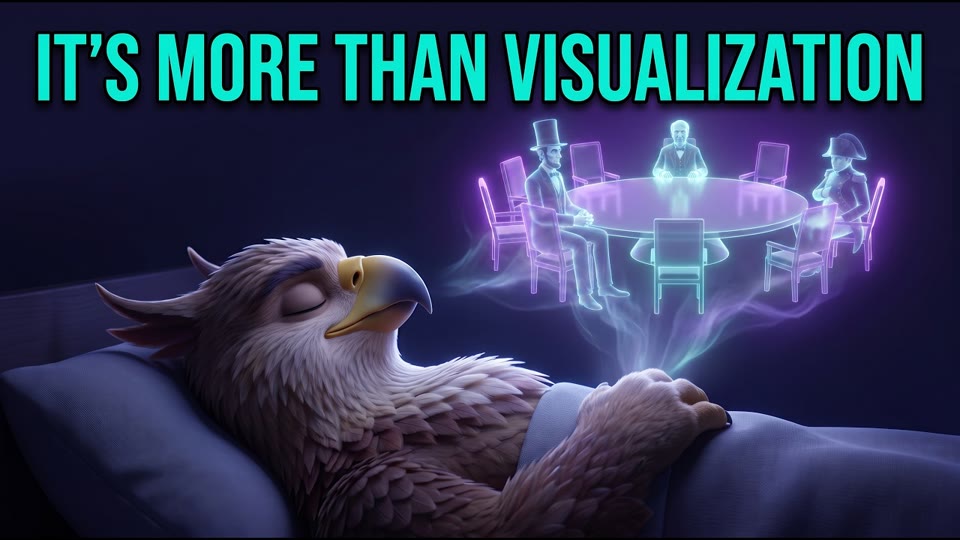
How Napoleon Hill (and the Rich) Actually Used Visualization
Hill called it an unexplained law of nature. Decades later, a plastic surgeon and a minister in unrelated fields each worked out the mechanism, and arrived at almost the same instructions.
Read the essay
Neville Goddard Said You Can Rewrite Your Past. Here's Where That Claim Breaks.
We take Neville Goddard's strangest technique, Revision, and hold it against David Chalmers' philosophy of mind, memory neuroscience and a forgotten 1970s experiment, to find the point where "rewrite your past" stops being a metaphor.
Read the essay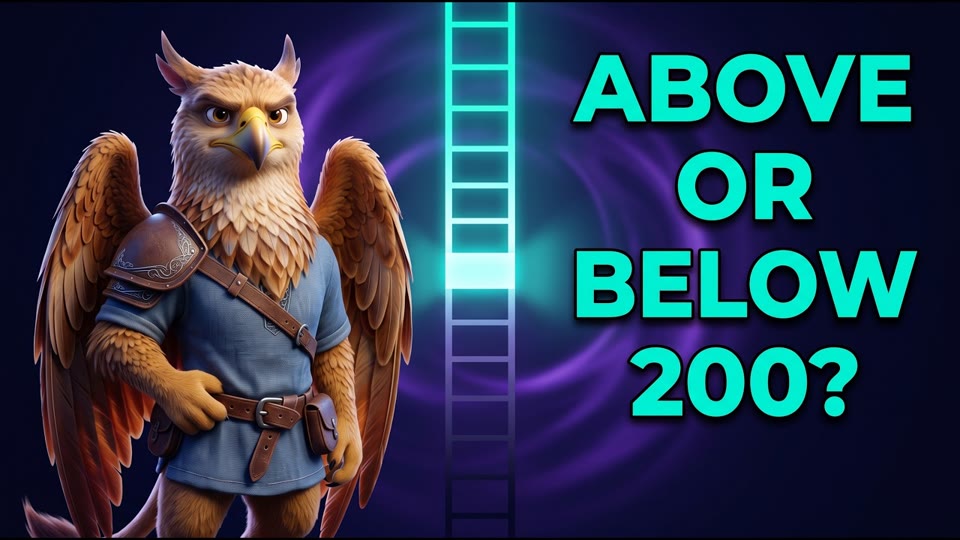
David Hawkins Put a Number on Every Human Emotion
David Hawkins built a 1-to-1000 scale for the whole of human consciousness, using a muscle-testing method he also built a defense against ever being disproven. Here's the ladder, the method, and where it holds up.
Read the essay
What Is Shadow Work? Jung, Tolle, Brown and Singer Agree on This
Carl Jung called it the shadow. Eckhart Tolle calls it the pain-body, Michael Singer calls it samskaras, and Brené Brown finds it under shame. Here is the one mechanism they all describe, and a four-step practice for the next time a reaction is bigger than the moment.
Read the essay
Moods Are Not Reactions: They're the Cause
Goddard, Dispenza and Hicks never met and never agreed on why any of this works. What they agreed on, without knowing it, is where people quit, one week before the mood would have hardened into fact.
Read the essay
What Is "The Field," and How You Actually Change Your Reality
The Field, the Divine Matrix, Source, the quantum field: six books, one thing. This traces it back to the physics, the point where evidence stops and interpretation begins, and Lynne McTaggart's seven-step method for using it.
Read the essay
What "Your Word Is Your Wand" Actually Means
Florence Scovel Shinn wrote a manual, not a poem. Eighteen chapters, one per area of life, all built on a single working claim: your words don't describe your life, they build it. A hundred years later the same mechanism is everywhere in a different century's vocabulary.
Read the essay
There Were Seven Laws. You Were Taught Three.
Attraction, Vibration, Assumption. You already know the new laws. What almost nobody tells you is that they restate a 1908 book that listed seven, and the missing four are the ones that explain why your practice works unevenly.
Read the essay
Reality Is A Mirror, But Nobody Agrees Who's Holding It
A Toltec nagual, a 1908 Hermetic text, a New Thought mystic, a modern bridge-builder and an Indian sage all say the outer reflects the inner. Then they split on one question: are you making the reflection, or finally seeing it? The split isn't a flaw. It's a map of where you are.
Read the essay
Your Body Remembers What Your Mind Forgot
A mystic, a neuroscientist, a trauma doctor and a psychiatrist arrive at the same answer. The "feel it real" instruction assumes a working felt sense, and nobody checked whether yours was online.
Read the essay
How to Find Your Passion, and Actually Live It
A Zen philosopher, a best-selling novelist, a success researcher and a monk who built a company by accident all describe the same move: read the signal, make it a definite aim, then commit to the step while surrendering the outcome. Here's the whole process.
Read the essay
The Voice In Your Head Is Writing Your Life
A New Thought mystic, a success researcher, a cell biologist, a neuroscientist, a Toltec nagual and a channeled voice all arrive at the same claim: your habitual self-talk is the mechanism that turns belief into biology. Then they show you how to work it on purpose.
Read the essay
Why Your Manifestations Aren't Working
Manifestation is a broadcast system, not a request system. You transmit your state, not your wish. Murphy, Goddard, Hicks, Dispenza and Shinn start from five different maps of reality and all circle the same quiet truth: you get what you are.
Read the essay
The Kybalion Explains Why The Four Agreements Work
Ruiz gives you the practice and the Kybalion gives you the physics. Read together, the Four Agreements stop being nice rules and become instructions for operating the nature of mind itself.
Read the essay
Why You Never Feel Good Enough
A neuroscientist, a plastic surgeon, a presence teacher, a Zen interpreter, a meditator and a mystic arrive at the same answer: the "not enough" feeling is a mechanism, and you can work with a mechanism.
Read the essay
If You Love Eckhart Tolle, You'll Love Neville Goddard
Tolle empties the sentence "I Am" and Goddard fills it. They share the same formless ground and use opposite verbs, and at the very end, Goddard's path circles back to where Tolle begins.
Read the essay
Two Completely Different Teachers. One Identical Map.
Joe Dispenza speaks in neurons, cortisol and the quantum field. Abraham-Hicks speaks in vibration, alignment and Source energy. Map the architecture underneath, and the structures are nearly identical.
Read the essay
If You Love Eckhart Tolle, You'll Also Love Abraham Hicks
Tolle's "surrender" and Abraham's "allowing" turn out to be the same inner gesture: stop resisting what is. The real fork comes later, and it's better news than you'd think.
Read the essay